ServicesRoof Treatments
Roof Treatments in Lansingburgh
Black streaks, green moss and crusty lichen don't have to mean a new roof. We apply a gentle treatment that kills the growth at the root, then let the weather rinse it away. You get a clear answer on what's growing and what it takes to fix it.
What a roof treatment does
Those dark streaks on many asphalt roofs are algae. It feeds on the limestone filler in shingles and spreads downhill from the ridge. Moss and lichen are tougher. They hold moisture against the shingle and can lift edges as they grow.
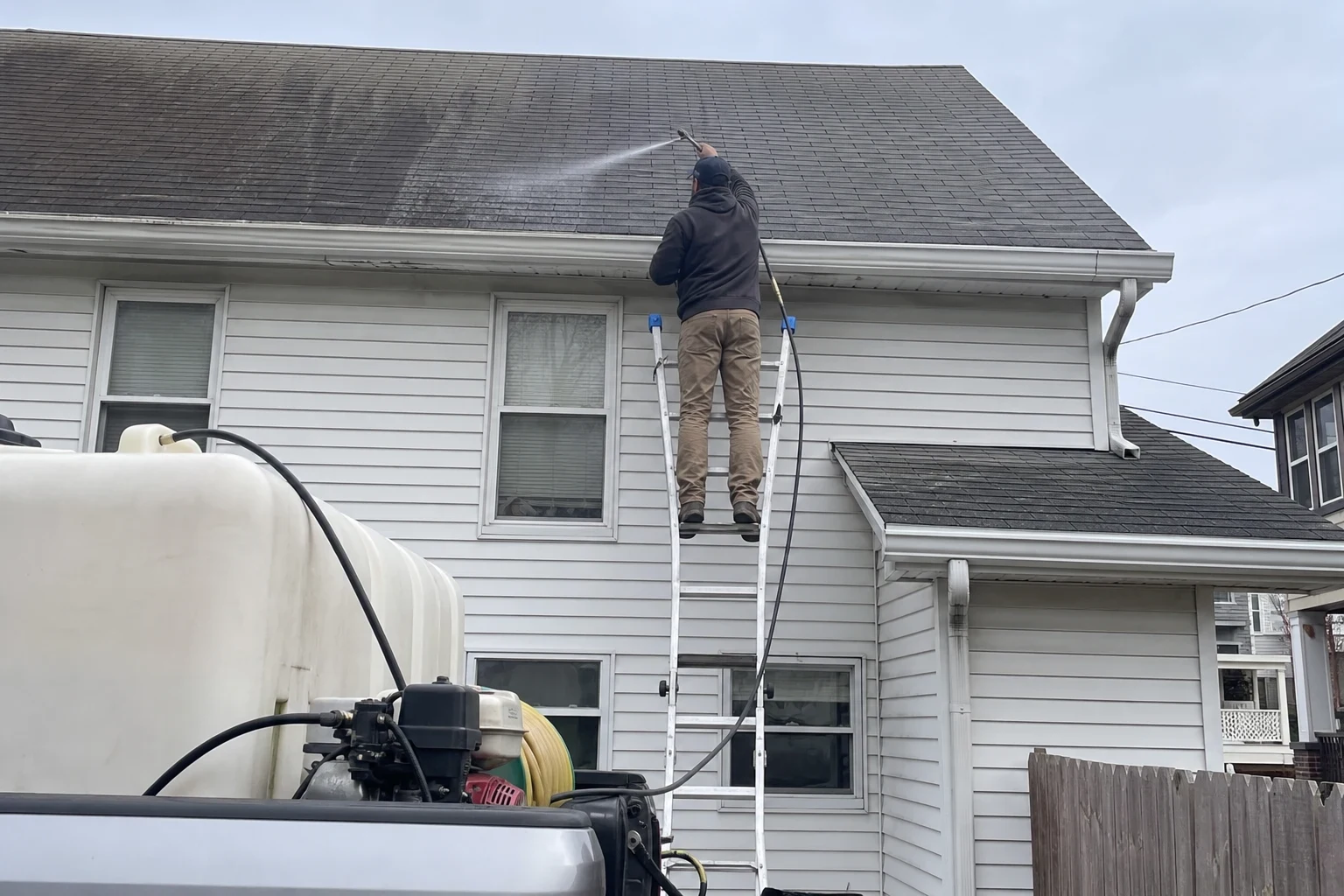
A roof treatment is a liquid applied at low pressure that kills that growth. Nobody blasts your shingles, and we keep foot traffic on the roof to a minimum. Over the next few weeks, rain and snowmelt loosen the dead growth and wash it off. Shaded north-facing slopes, common under the big trees on older lots around here, often need it most.
If the shingles underneath are worn out, we'll tell you plainly. A treatment improves a sound roof's looks and slows wear. It won't fix a roof that's already failing.
What's included in the work
A look at what's actually growing
Algae, moss and lichen respond differently, so we identify which one you have before we quote. We'll show you where it's heaviest and why.
Protecting plants and siding
We wet down shrubs and flower beds before we start and rinse them again after. Anything that can't be moved gets covered.
Low-pressure application
The treatment goes on as a light, even coat across the affected slopes. No pressure washer touches your shingles, which keeps the protective granules where they belong.
Attention to the problem spots
Valleys, the shaded side and areas under overhanging branches usually carry the thickest growth. Those get extra care so the results stay even across the roof.
A plain walkthrough when we finish
Before we leave, we tell you what to expect over the coming weeks and which areas may take longer to clear.
Signs your roof could use a treatment
- Dark streaks running down the slope
- Those black or gray stripes are almost always algae, not dirt. They tend to get wider every year.
- Green moss along shingle edges
- Moss traps water and can push shingle tabs up. In our freeze-and-thaw winters, that trapped moisture works its way into small gaps.
- Pale, crusty spots that won't wash off
- That's usually lichen. It grips the surface hard and keeps growing slowly if left alone.
- One side looks much worse than the other
- The shaded slope stays damp longer, so growth starts there first. Treating early keeps it from spreading across the roof.
How a treatment day goes
- 1
It begins with a call
Describe what you see up on the roof. We pick a time to stop by and give you a free quote in plain words.
- 2
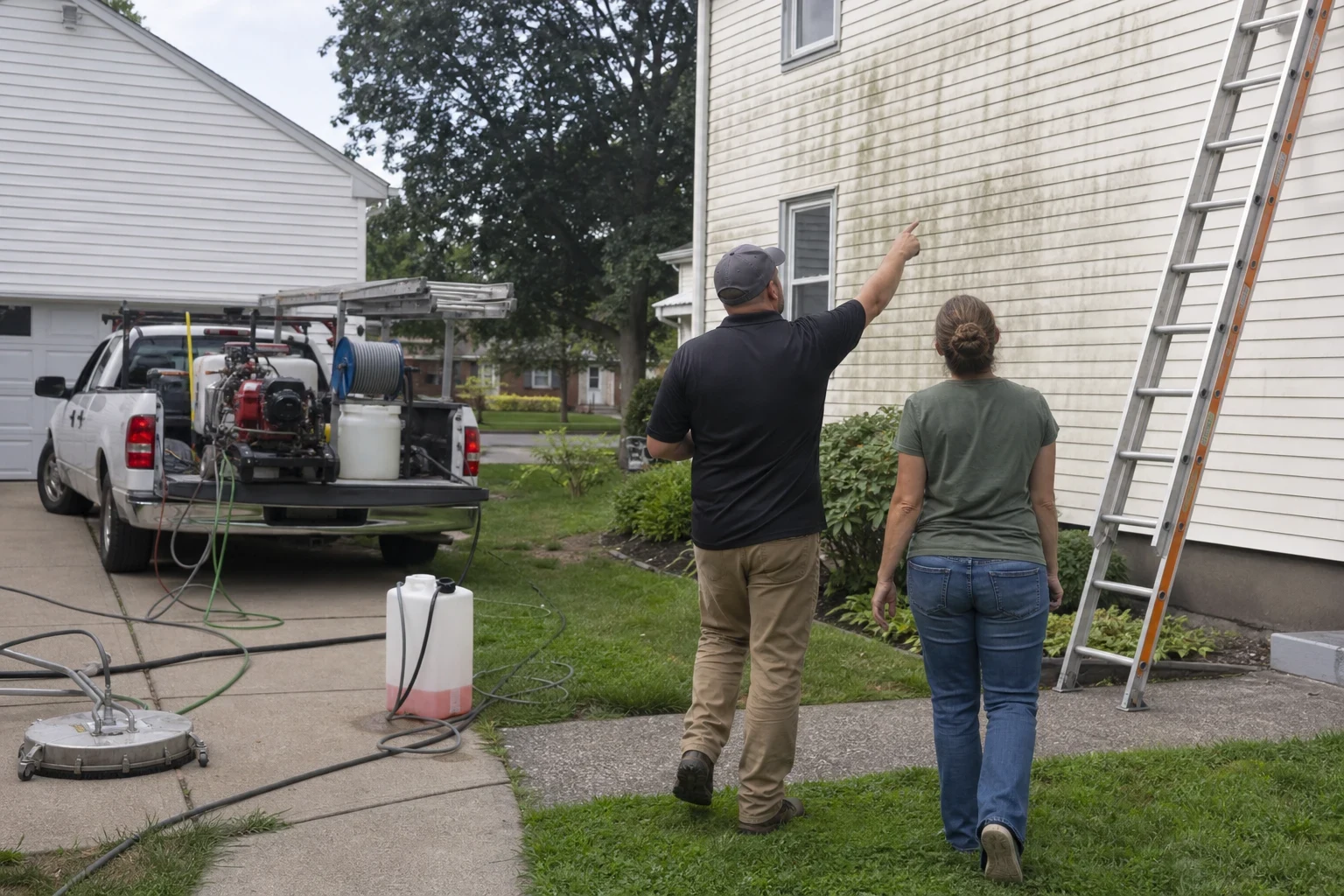
We inspect and tell you what we see
We note what is growing, how steep the roof is and how the shingles are holding up. You learn the cause and whether treating it is worth doing.
- 3
Protect, then treat
We pick a dry day without much wind, cover your plants and walks, and treat the roof one slope at a time. Most houses take only part of a day.
- 4
Rain does the rest
Algae is the first to fade once it is dead. Heavy moss and lichen loosen and drop off more slowly. We give you the timeline up front so you know what to expect.
What moves the price
Every roof is a little different, so we quote after seeing yours. The quote is free and itemized, and you'll know what drives the number before you decide. Here's what changes it most.
- Roof size and pitch
- More square footage means more product and time. Steep roofs take extra care and safety setup.
- Type and amount of growth
- Light algae streaks are the simplest job. Heavy moss or old lichen may need a stronger mix or a second pass.
- Height and access
- A two- or three-story home, tight side yards or lots of landscaping close to the walls add setup time.
- Roof material
- Asphalt shingles are the most common. Other materials can call for a different product or method, which we'll explain.
Roof treatment questions
- Will the treatment damage my shingles?
- No. It's applied at low pressure, so there's nothing scrubbing or blasting the surface. The goal is to protect the granules on your shingles, not strip them.
- How soon will my roof look clean?
- Algae streaks usually fade within a few weeks of rain. Moss and lichen hold on longer and can take a season to fully let go. We'll tell you what to expect for your roof before we start.
- How long do the results last?
- It depends on shade, nearby trees and how much moisture the roof holds. Sunny roofs stay clear longer than ones under heavy branches. Trimming back overhanging limbs helps a lot.
- Is it safe for my garden and pets?
- We wet down plants before and after, and cover what we can. Keep pets inside while we work and until things dry, and they'll be fine.
- Do I need a new roof instead?
- Maybe not. If the shingles are still sound, a treatment brings back the look and slows wear. If they're curling, cracked or losing granules everywhere, we'll say so honestly.
- Can you treat the roof before lights go up?
- Yes, and it's a smart order of work. If you're also thinking about permanent exterior lighting installation along your roofline, treating first means the lights sit against a clean edge.
Find out what's growing on your roof
Tell us what you're seeing and we'll come take a look. You'll get a straight answer on the cause and the cost.